

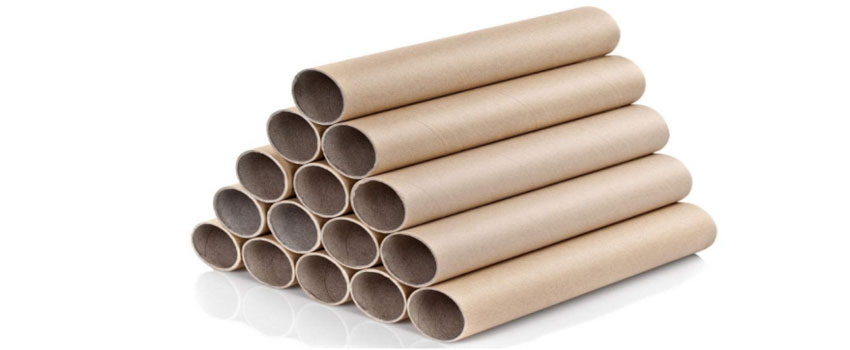
Quality paper cores support steady production, and they help businesses with winding, storing, and transporting materials. When manufacturers match core strength and sizing to each application, production lines may operate with fewer disruptions and more consistent output. Here are a few ways to optimize production with quality paper cores:
Identify the Right Cores
Businesses that select paper cores that match their needs can have a streamlined production process. Analyze your desired dimensions, like diameter and length, and confirm a higher load capacity for heavier substrate needs. Assessing your production speeds helps you select the core strength that supports faster winding without failure.
Decide on label core dimensions, styles, and the addition of color to differentiate products. Advance input on your tape and label cores facilitates automated processes to help cut waste through precision. Some cores support custom printing on the interior and exterior, which allows you to have cohesive branding on your products. Film cores sometimes have different surfaces, such as ground or polished, helping to further customize your tubes. Suppliers also may have yard cores and provide embossing and coloring options.
Use Mailing and Packaging Tubes
Tailor-made mailing and packaging tubes help support your mailing operations, and you can specify the tubing lengths, wall thicknesses, cap styles, and inside diameters. Share your packaging processes to get the spiral-rolled tubes with the right closure options to suit your mailing needs. It is helpful to specify shipping dimensions, printing needs, and branding, as this can confirm tubes that support your workflows when loaded on production lines. Working with your supplier to create convolute paper tubes that match your packaging needs can enhance production speed. Some packaging tubes are lightweight, while others are heavyweight to protect delicate contents.
Confirm Specifications for Construction Tubes
Accurate technical specifications help support the structural performance of construction tubes. This involves making sure the tubes match the required lengths of columns and pilings. By confirming the diameter and wall thickness, you align the tubes with the building’s structural capacities. Evaluating the job site requirements helps to identify tube specifications that align with project needs.
Specialized paper tubes and convoluted cores play a role in streamlining your project. You can specify each end user’s tube format to coordinate with their workflow and material movement. Planning tube specifications in advance helps production teams use spirally wound tubes effectively. Look for paper core suppliers with construction tubes that are weather-resistant, as this is beneficial for projects that will be subject to adverse weather. Some of these construction tubes are also lightweight, but they are made of durable materials that create ideal substitutes for metal supports.
Partner With Paper Cores Manufactures
Manufacturing and service industries can use cores to create sustainable, efficient supply chains. Consistent quality of this input helps streamline downstream activities, prevent malfunctioning equipment, and simplify operations. Advance planning integrates paper cores into existing designs, and this helps support efficient workflows. Contact a supplier today to discover how the right tube can support your production through advanced paper core technology.